
Troops in DC Battle Dissidents, Deregulation, Tariff Modification, and More
The Capitol Hill Reader #107

Today we have a list of highly controversial, consequential executive actions for you to read about. These include the activation of the D.C. National Guard and attempted takeover of D.C.’s Metropolitan Police Department, the revocation of a Biden-era executive order that included many, many protections for a free and fair American marketplace, and a lot more.
Also, we are working on the podcast and we hope to have it up and running by the end of this month. Turns out recording, editing, and everything in between is a lot harder than expected.
Table of Contents
Proclamation - 90TH ANNIVERSARY OF THE SOCIAL SECURITY ACT
Executive Order - REVOCATION OF EXECUTIVE ORDER ON COMPETITION
Executive Order - ENABLING COMPETITION IN THE COMMERCIAL SPACE INDUSTRY
Executive Order - ENSURING AMERICAN PHARMACEUTICAL SUPPLY CHAIN RESILIENCE BY FILLING THE STRATEGIC ACTIVE PHARMACEUTICAL INGREDIENTS RESERVE
Executive Order - FURTHER MODIFYING RECIPROCAL TARIFF RATES TO REFLECT ONGOING DISCUSSIONS WITH THE PEOPLE’S REPUBLIC OF CHINA
Memorandum - RESTORING LAW AND ORDER IN THE DISTRICT OF COLUMBIA
Executive Order - DECLARING A CRIME EMERGENCY IN THE DISTRICT OF COLUMBIA
Like what you read below? Consider becoming a free or paid subscriber today! We love what we do, and we can’t do it without your support.
August 14, 2025
Proclamation - 90TH ANNIVERSARY OF THE SOCIAL SECURITY ACT
This is a proclamation from the President honoring the 90th anniversary of the Social Security Act. Like most of his proclamations, it focuses more on personal accomplishments than anything else. Here is an excerpt:
To further strengthen Social Security, my Administration is aggressively rooting out all fraud, waste, and abuse that rob our Federal programs of resources — including stopping payments to the deceased and eliminating benefits for those who do not legally qualify. These measures will save American taxpayers billions of dollars every year and ensure that future generations receive the benefits they spent their lives paying into. At the same time, I am making the Social Security Administration more efficient, more responsive, and more effective than ever before — reducing wait times and delivering the payments the American people worked hard to earn. I am also proudly restoring strong border security policies to ensure that Medicare and Social Security are preserved for the citizens who paid into them — not abused by illegal aliens who have no right to be here [1].
August 13, 2025
Executive Order - REVOCATION OF EXECUTIVE ORDER ON COMPETITION
As its title suggests, this executive order is revoking a previous one, E.O. 14036 - Promoting Competition in the American Economy, issued on July 9, 2021 by President Biden [2].
This order had been one of the most wide-ranging competition policy efforts in recent history, containing 72 initiatives across more than a dozen federal agencies.
At its core, the revoked order directed the Department of Justice and the Federal Trade Commission to pursue stronger antitrust enforcement, including challenging past mergers and scrutinizing dominant firms in technology, labor, healthcare, and agriculture. It also created the White House Competition Council to coordinate these efforts across the executive branch.
Beyond antitrust, the order encouraged agencies to curb the use of non-compete agreements, reduce overly restrictive occupational licensing requirements, and reinstate net neutrality rules to promote broadband competition [2]. It also supported the “right to repair” by pushing for rules that made it easier for consumers and farmers to repair their own equipment rather than being forced to rely on manufacturers [2].
In the agricultural sector specifically, it tasked the Department of Agriculture with strengthening enforcement of the Packers and Stockyards Act to protect farmers from unfair practices by large industry players [2].
In healthcare, it directed agencies to focus on lowering prescription drug prices and addressing consolidation that limited patient choice [2].
Together, these measures represented a comprehensive, “whole-of-government” strategy to reduce concentration and promote fairer markets [2]. With the revocation, all of these directives and institutional mechanisms - such as the Competition Council - have been nullified, removing the coordinated federal framework EO 14036 had established.
Executive Order - ENABLING COMPETITION IN THE COMMERCIAL SPACE INDUSTRY
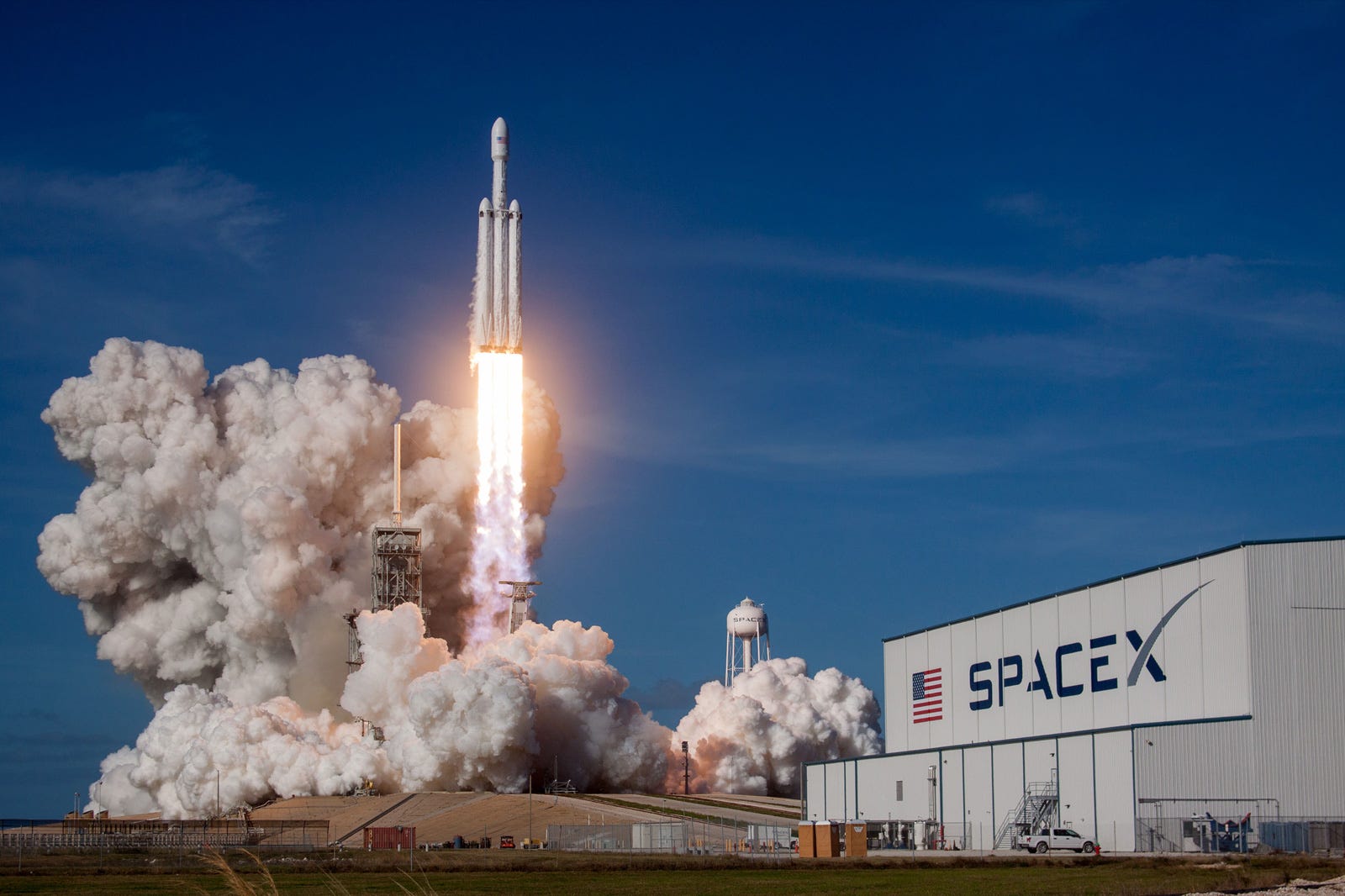
This executive order is a sweeping directive to overhaul how the federal government regulates and supports the commercial space industry, with the explicit goal of making the United States the global leader of this sector by 2030 [3].
Via the order, the Department of Transportation is directed to accelerate or bypass environmental reviews where legally permissible, revise its commercial launch regulations to remove outdated or unnecessary requirements, and report on these changes within 120 days [3]. Parallel to this, the Department of Commerce, NASA, the Department of Defense, and other agencies must coordinate to expedite “spaceport infrastructure approvals” and create new categorical exclusions under environmental law to speed up development.
In other words, if an organization wanted to build a spaceport near a marsh, but this marsh contained protected habitat, this executive order would facilitate the building of that spaceport anyway. Environmental reviews will be drastically reduced.
The order also instructs the Department of Commerce to design a new system for approving novel space activities not covered by existing regulations but falling under U.S. obligations in the Outer Space Treaty, such as experimental missions or “unconventional technologies” [3].
Finally, to “reinforce accountability,” the order requires the Department of Transportation to create a dedicated senior position focused on innovation and deregulation in space transportation, and for the Department of Commerce to elevate the Office of Space Commerce to a higher level within the agency [3].
In short, this order seeks to dismantle what it views as bureaucratic and environmental obstacles, centralize authority in key agencies, and dramatically accelerate the pace of commercial space operations in the United States, framing it as a national security imperative.
Executive Order - ENSURING AMERICAN PHARMACEUTICAL SUPPLY CHAIN RESILIENCE BY FILLING THE STRATEGIC ACTIVE PHARMACEUTICAL INGREDIENTS RESERVE
This next executive order focuses on strengthening America’s “pharmaceutical supply chain” by restoring and expanding domestic production of active pharmaceutical ingredients (APIs) and ensuring the nation has a reliable stockpile of materials needed to produce essential medicines [4].
During the president’s first term, he issued Executive Order 13944 of 2020; these directed agencies to increase domestic procurement of medicines and to identify various blindspots in America’s pharmaceutical supply chain. That effort produced a list of 86 essential medicines, but the order notes that while nearly 40 percent of finished drug products are manufactured in the United States, only about 10 percent of the APIs that go into them are domestically produced [4].
To mitigate this reliance on foreign suppliers (namely China), Trump’s first administration created the Strategic Active Pharmaceutical Ingredients Reserve (SAPIR), designed to stockpile APIs because they are cheaper to store and last longer than finished drug products [4]. According to this order, however, the Biden Administration “failed to maintain progress,” allegedly “leaving the reserve nearly empty despite significant federal spending” [4].
To correct this, the order directs the Department of Health and Human Services’ Assistant Secretary for Preparedness and Response (ASPR), in consultation with relevant agencies and White House offices, to identify about 26 drugs deemed “most critical to national health and security” [4]. Within 30 days, ASPR must produce both that list and an accounting of available funds that can be used to finance and open the SAPIR repository.
The Office of Management and Budget is tasked with assisting in reallocating funds to support this effort. Within 120 days, ASPR must ready the repository to begin storing APIs, and once operational, it must acquire and maintain a six-month supply of the APIs needed for the critical drugs, prioritizing domestic manufacturers where possible.
In sum, the order seeks to insulate the United States from the global pharmaceutical supply chain and reduce dependence on foreign sources to produce and supply essential medicines.
August 11, 2025
Executive Order - FURTHER MODIFYING RECIPROCAL TARIFF RATES TO REFLECT ONGOING DISCUSSIONS WITH THE PEOPLE’S REPUBLIC OF CHINA
This executive order extends and formalizes the president’s ongoing use of emergency trade powers to regulate imports from China [5].
The order references a series of past executive orders: EO 14257 of April 2025, which declared a national emergency under the International Emergency Economic Powers Act (IEEPA) and imposed tariffs on imports from countries, notably China; EO 14259 and EO 14266, which again raised tariff rates on China; and EO 14298, which temporarily suspended some of those tariffs for 90 days while trade negotiations were underway [5]. That suspension was due to expire on August 12, 2025. In this new order, the president finds that China has made progress in addressing U.S. concerns and, based on recommendations from senior officials, determines it’s necessary to continue the suspension of certain ad valorem duties until November 10, 2025 [5].
Substantively, Section 2 directs that the specific tariff provisions in the Harmonized Tariff Schedule of the United States (HTSUS) - namely heading 9903.01.63 and a related subdivision - remain suspended through the new deadline. Section 3 then assigns responsibility for implementing this extension to the Departments of Commerce, Homeland Security, Treasury, and State, the Office of the U.S. Trade Representative, and other relevant officials and agencies, empowering them to issue regulations, amend notices, and use all powers available under IEEPA and related statutes to give effect to the order. In practice, this means agencies must coordinate to keep the suspended tariff structure in place while negotiations with China continue, with the option to adjust procedures as necessary [5].
In other words, domestic importers are experiencing serious tariff whiplash, and all of these agencies will need to work quickly to backpedal the President’s performative trade policy, while, at the same time, being prepared to reimplement it.
The order derives its legal authority from several statutes: the International Emergency Economic Powers Act (50 U.S.C. 1701 et seq.), which allows the president to regulate economic transactions in response to foreign threats once a national emergency is declared; the National Emergencies Act (50 U.S.C. 1601 et seq.), which provides the procedural framework for such declarations; section 604 of the Trade Act of 1974, which authorizes modifications to the HTSUS; and 3 U.S.C. § 301, which allows the president to delegate functions to agency heads.
In other words, the White House has taken full control of America’s trade policy, and Congress is powerless to stop it.
Memorandum - RESTORING LAW AND ORDER IN THE DISTRICT OF COLUMBIA
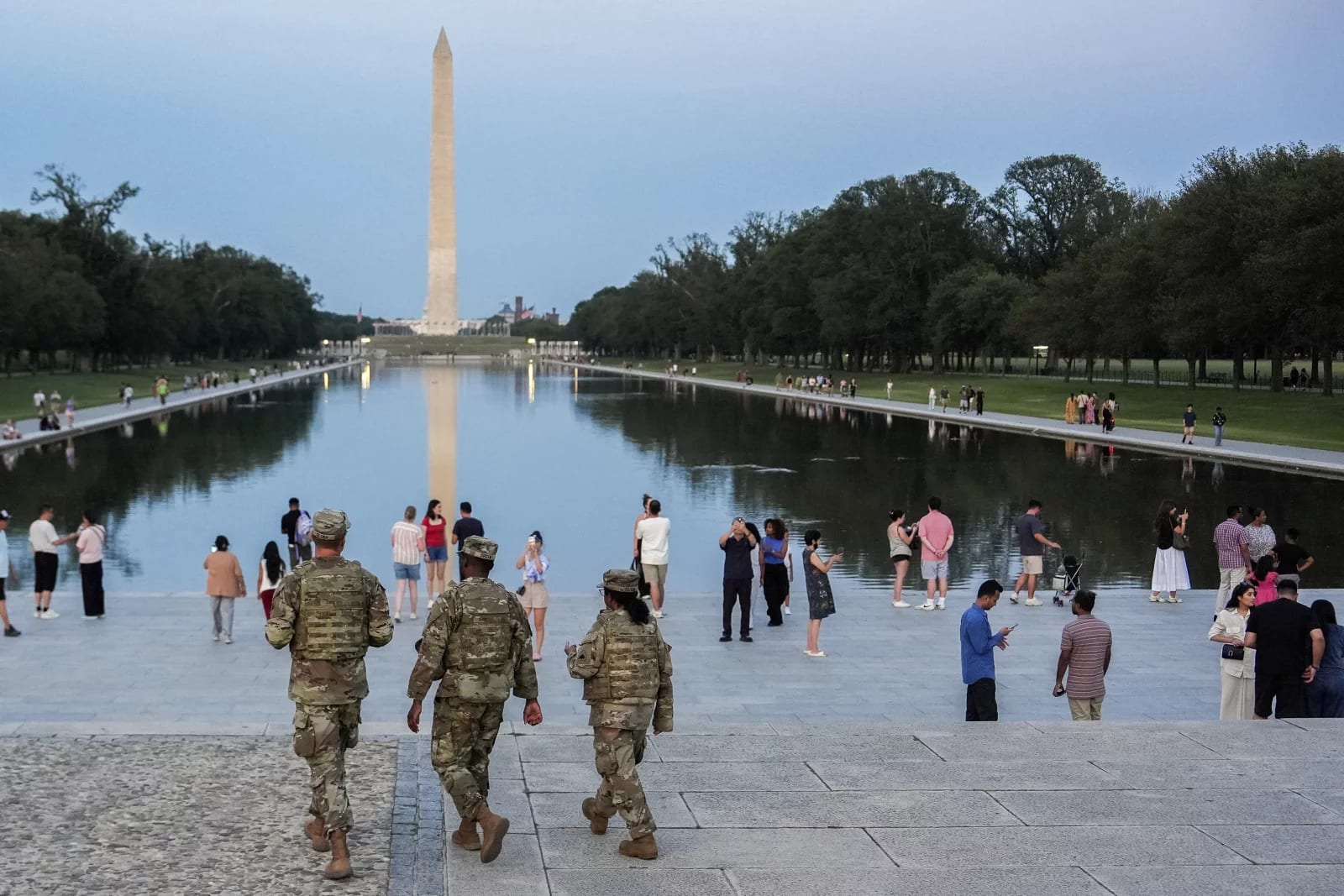
This executive order directs the mobilization of the District of Columbia National Guard in response to what the president characterizes as a breakdown of public safety in Washington, D.C.
The order cites recent high-profile incidents -murders of foreign embassy staffers, the fatal shooting of a congressional intern near the White House, and the attempted carjacking of a government staffer (whose nickname has reportedly been changed from “Big Balls” to “No Balls”) - as evidence that the city has experienced a complete breakdown of law and order. The president asserts that violent crime in the nation’s capital has reached levels comparable to some of the most dangerous places in the world, calling it a national disgrace that threatens both public safety and the functioning of government [6].
This is interesting, as data suggests the opposite. Per the DOJ, violent crime in the Nation’s Capital dropped by about 35% in 2024, marking a 30-year low [7]. Homicides fell by 32%, robberies by 39%, and assaults with dangerous weapons by 27% compared to 2023. As of mid-2025 D.C. has continued this downward trend. A recent report shows overall violent crime in D.C. fell by 26% year-to-date compared to the prior year [7].
Other cities with much higher rates of crime, cities like Houston, Texas, Kansas City, Missouri, and Little Rock, Arkansas, have seen little federal fervor for reformation and “cleaning up the streets” - unless related to immigration, that is.
To address this alleged breakdown of civilization, Section 2 formally orders the Secretary of Defense to mobilize the D.C. National Guard and place members on active duty. The order gives the Secretary broad discretion in determining the scale and duration of the deployment, which is to continue until the president decides that conditions of law and order have been restored. It also authorizes coordination with state governors and the activation of additional National Guard units from outside the District if deemed necessary to augment the mission.
Legally, this action draws on the president’s unique constitutional and statutory authority over the District of Columbia National Guard. Unlike state National Guards, which are normally under the command of governors (normally), the D.C. Guard reports directly to the president through the Department of Defense. That authority allows the president to mobilize Guard forces without local government consent; this is not to say that the National Guard units of other states can’t be activated without governor consent, as we saw in California.
In the meantime, three Republican-led stated - West Virginia, Ohio, and South Carolina - have also pledged to send National Guard troops to help reconquer DC from the post-apocalyptic bands of football-pad-wearing cannibals.
Attorney General Pam Bondi was momentarily tapped for a leadership role over the Metropolitan Police Department in Washington, D.C. (via the below EO), but her appointment faced significant pushback and procedural obstacles, causing the government to quietly abandon this attempt.
In total, the order effectively places control of public safety operations in the nation’s capital under direct federal command, expanding the military’s role in law enforcement and setting the stage for further action elsewhere.
Executive Order - DECLARING A CRIME EMERGENCY IN THE DISTRICT OF COLUMBIA
This order is the second prong of Trump’s federal takeover of local policing in Washington, D.C., using the Home Rule Act of 1973 as its legal basis.
As expected, the order opens with an extended justification and mirrors a lot of the same language as the above memorandum: the president declares that violent crime in the District has reached emergency levels, threatening not only residents and visitors but also the functioning of the federal government itself [8]. It highlights data showing that D.C. has among the highest murder, robbery, and car theft rates in the nation, and even ranks among the most dangerous cities globally [8].
The president frames this crime crisis as both a disgrace and a direct threat to federal operations, since public servants, diplomatic personnel, and federal workers must be able to operate without fear of being victimized. The order also casts the local government as having failed in its duty to maintain order, thereby necessitating federal intervention.
The order invokes section 740 of the Home Rule Act, which allows the president to direct the D.C. Mayor to provide the services of the Metropolitan Police Department (MPD) “for federal purposes” under emergency conditions [8]. Using that provision, the order requires the mayor to commit the MPD to protecting federal buildings, monuments, property, and ensuring order so the government can function properly. Operational control of the MPD is then effectively transferred to the Attorney General (Pam Bondi) [8].
This means that, while the police remain technically under the mayor, their deployment and use for federal purposes will be dictated by the Attorney General, not the D.C. government. However, like we mentioned in the previous summary, this has not gone according to plan; at the moment, Bondi does not have direct control of the MPD.
In practical terms, this order attempts to strip the District of Columbia of its effective control over its own police force and places that authority in federal hands. The move underscores the constitutional reality that D.C. is not a state and that Congress - and by extension, the president - retains ultimate authority over its governance.
This intervention goes far beyond the president’s usual control of the D.C. National Guard, attempting to expand federal command into civilian law enforcement (despite the existence of laws to prevent this, such as the Posse Comitatus Act). It’s framed as necessary to restore order and protect federal functions, but it also represents a rare and controversial use of executive authority to override local self-government in the nation’s capital.
Thank You For Reading
We hope you enjoyed this issue of the Capitol Hill Reader. If so, let us know! Leave us a comment, share our article, or even just give us a like. It helps a lot.
If you’re not already subscriber, consider joining our community today! We sometimes have filtered water.
Stay informed.
1.) https://www.whitehouse.gov/presidential-actions/2025/08/90th-anniversary-of-the-social-security-act/
2.) https://www.whitehouse.gov/presidential-actions/2025/08/revocation-of-executive-order-on-competition/
3.) https://www.whitehouse.gov/presidential-actions/2025/08/enabling-competition-in-the-commercial-space-industry/
4.) https://www.whitehouse.gov/presidential-actions/2025/08/ensuring-american-pharmaceutical-supply-chain-resilience-by-filling-the-strategic-active-pharmaceutical-ingredients-reserve/
5.) https://www.whitehouse.gov/presidential-actions/2025/08/further-modifying-reciprocal-tariff-rates-to-reflect-ongoing-discussions-with-the-peoples-republic-of-china/
6.) https://www.whitehouse.gov/presidential-actions/2025/08/restoring-law-and-order-in-the-district-of-columbia/
7.) https://www.fox5dc.com/news/dc-crime-trends-trump-national-guard
8.) https://www.whitehouse.gov/presidential-actions/2025/08/declaring-a-crime-emergency-in-the-district-of-columbia/
Glad they're finally addressing that cannibal issue. It's gone on far too long. Also like "No Balls" new nickname. I have to admit that part of me wonders if he was the "crisis actor" needed for the final nudge to militarize DC...