
The Capitol Hill Reader 131: What Passed Quietly
Religion, tariffs, courts, and the parts that didn’t make the headlines

Hello Readers,
We have an interesting digest for you this week, with some notable executive actions, congressional activity, and cases in the federal courts.
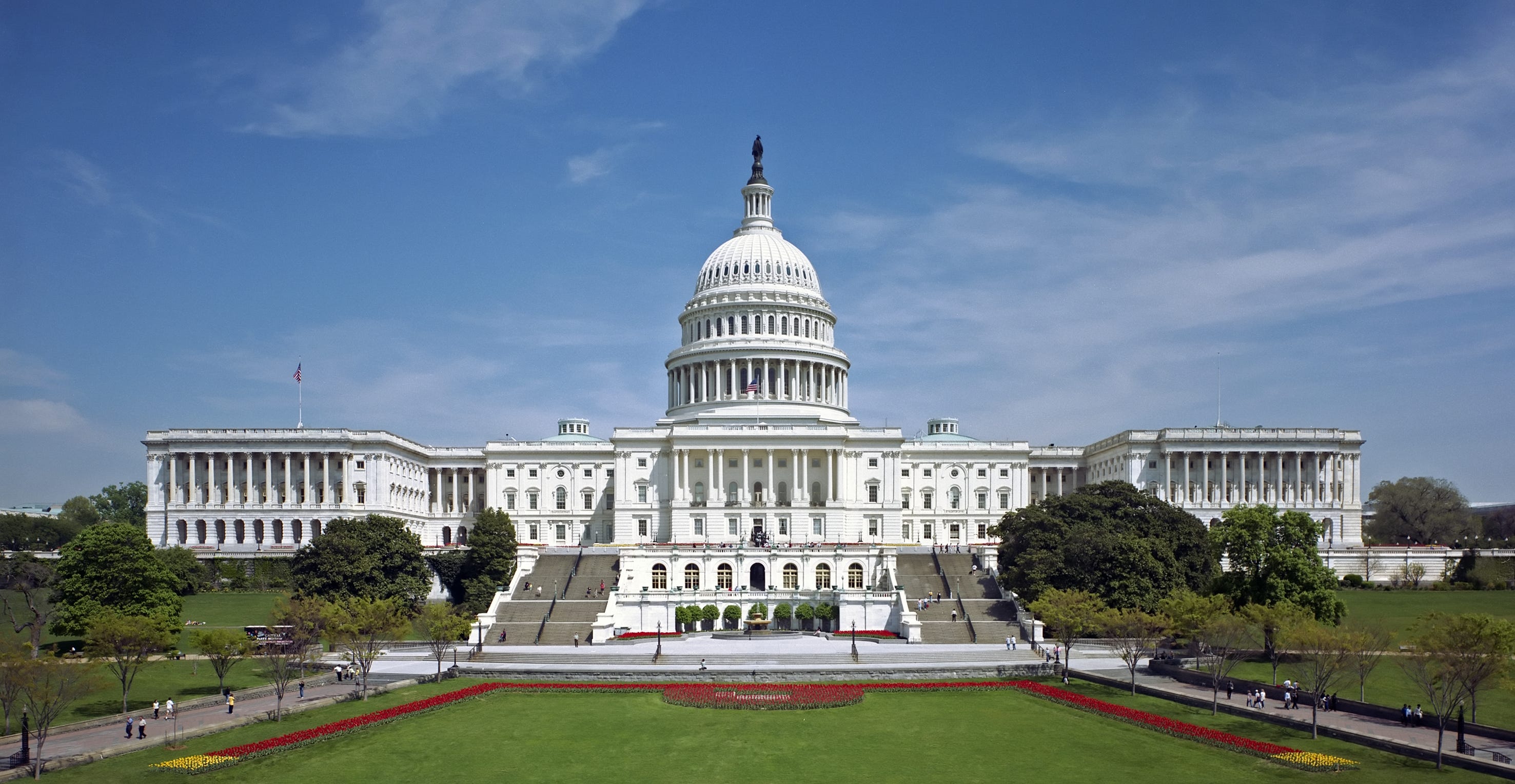
What’s in this week’s digest?
Trump leans hard into religion, trade, and labor power with a Religious Freedom Day proclamation that explicitly centers Christianity in public institutions, paired with aggressive Section 232 proclamations threatening tariffs on semiconductors and critical minerals in the name of national security.
Federal authority steps into stalled labor disputes and supply chains as the White House creates a second emergency board to freeze Long Island Railroad labor conditions and uses national security law to pressure companies to reshore chip and mineral production.
Congress quietly funds the government at scale, passing a massive bipartisan appropriations bill that boosts law enforcement, science, climate-adjacent agencies, and industrial policy despite the usual culture-war rhetoric.
Procedural fights shape foreign policy and healthcare with the Senate blocking fast-track consideration of a Venezuela war-powers resolution and rejecting a Democratic attempt to overturn new CMS marketplace and Medicaid-related rules.
Courts remain a flashpoint from injunctions limiting ICE tactics and reversals of activist releases to looming appeals, shadow-docket implications, and a politically charged DOJ probe into Fed Chair Jerome Powell.
(PAID SECTION) The Convenient Myth of One-Sided Judicial Activism - in this week’s paid section, we talk about the concept of “activist judges” and how this manifests in federal courts on both sides of the ideological aisle.
If you like what you see below, consider supporting our publication as a free or paid subscriber! Use the link to subscribe for 50% off; that’s $2.50 a month or $25 a year to support independent journalism. Woah.

*****Current paid subscribers, be sure to check out your exclusive section at the bottom of this article*****
The Actions of the President
The titles below are the same as on the White House website, which you can see here. You can also click on the hyperlinked titles to read the actions themselves.
January 16, 2026
Proclamation - RELIGIOUS FREEDOM DAY, 2026
This is a proclamation championing President Trump’s push to integrate Christianity into the public sphere. Here is an excerpt:
This year, as we celebrate the 250th anniversary of American independence, my Administration is boldly bringing faith back to the public square because the freedom of religion means the freedom to practice your religion proudly, publicly, and without fear of persecution. As President, I am leading a renewal of faith in our schools, military, workplaces, hospitals, and halls of Government because the revolution of common sense is incomplete without a resurgence of faith in God. To further strengthen families and protect religious freedom, I established the White House Faith Office and the Religious Liberty Commission. I also proudly established a Task Force to Eradicate Anti-Christian Bias, which is charged with identifying and eliminating all anti-Christian policies, practices, and conduct in executive departments and agencies. I directed the Department of Education to protect the foundational First Amendment right to prayer in public schools. And as part of my Administration’s historic Freedom 250 initiative, we launched America Prays — an invitation to Americans of every background to join together in prayer for wisdom, guidance, and blessing as our Republic enters its next great chapter.
So as you can see, when the proclamation says “Religious Freedom,” it means “freedom to legally insert Christian practices into publicly funded environments.”
January 14, 2026
Proclamation - ADJUSTING IMPORTS OF SEMICONDUCTORS, SEMICONDUCTOR MANUFACTURING EQUIPMENT, AND THEIR DERIVATIVE PRODUCTS INTO THE UNITED STATES
This proclamation formally adopts the Commerce Department’s recent finding that current U.S. imports of semiconductors and related products pose an alleged “national security risk,” namely because domestic production is limited and the United States relies heavily on foreign supply chains. Because of this, it invokes Section 232 of the Trade Expansion Act to justify federal intervention; specifically, it threatens a 25 percent tariff on related imports that do not directly support and/or strengthen the U.S. supply chain.
In practical terms, this proclamation uses national security law to pressure companies and trading partners to shift semiconductor production toward the United States, while preserving access to critical chips in areas where they directly support domestic innovation and defense needs
Executive Order - ESTABLISHING A SECOND EMERGENCY BOARD TO INVESTIGATE DISPUTES BETWEEN THE LONG ISLAND RAIL ROAD COMPANY AND CERTAIN OF ITS EMPLOYEES REPRESENTED BY CERTAIN LABOR ORGANIZATIONS
Some background information on this one: the Long Island Rail Road has been locked in unresolved labor disputes with multiple unions representing its workforce, including communications, engineering, signal, machinist, and electrical workers. An initial presidential emergency board was convened in September 2025 under the Railway Labor Act, but there was no final agreement made.
This new executive order establishes a second presidential emergency board under the Railway Labor Act to intervene and help resolve the disputes. The board will be made up of three members appointed by the President. During the board’s tenure, both labor and management are legally barred from changing working conditions, effectively freezing the status quo and preventing strikes or lockouts.
The process is designed to force structured bargaining while preserving uninterrupted rail service. It uses federal authority to impose a cooling-off period and compel a “resolution framework” when traditional labor negotiations have broken down.
Proclamation - ADJUSTING IMPORTS OF PROCESSED CRITICAL MINERALS AND THEIR DERIVATIVE PRODUCTS INTO THE UNITED STATES
Much like the above proclamation surrounding semiconductors and related products, this proclamation states that the United States relies too heavily on foreign countries for processed critical minerals. It finds that even when minerals are mined domestically, the lack of U.S. processing capacity forces dependence on foreign supply chains (namely China) which then creates economic and security risks.
The proclamation warns that supply disruptions or price swings could pose a significant risk to the United States. In response, it directs the administration to negotiate with foreign partners to secure more reliable supplies of these materials, leaving open the possibility of tariffs and other import restrictions if negotiations fail.
January 13, 2026
Nominations & Appointments - Nominations Sent to the Senate
This is a long list of nominations sent by President Trump to the Senate for confirmation. To check it out, click the hyperlinked title above.
The Actions of Congress
The Senate
Notable Measures Considered
H.R.6938 - Commerce, Justice, Science; Energy and Water Development; and Interior and Environment Appropriations Act, 2026
This appropriations bill funds a massive swath of the federal government for fiscal year 2026, covering Commerce, Justice, Science, Energy and Water, Interior, and environmental agencies in one consolidated package. It pours billions into law enforcement, prisons, immigration courts, and federal prosecutors, while also heavily funding NOAA, the Census Bureau, NIST, and science and technology programs that underpin everything from weather forecasting to semiconductor standards. The Justice Department alone receives tens of billions across the FBI, DEA, ATF, U.S. Marshals, and federal prisons, and the bill also continues large, mostly bipartisan investments in industrial policy, trade enforcement, and domestic manufacturing support. In short, this is not a narrow or ideological bill, but a broad “keep the lights on and the machinery running” measure for the federal government.
What may surprise people is how little of this bill resembles the culture-war caricature often associated with appropriations fights. Despite fierce rhetoric about defunding agencies, the FBI, DEA, ATF, and federal prisons all receive substantial funding increases or sustained high levels, while immigration courts and detention costs are quietly funded at scale. NOAA and climate-adjacent agencies also remain well funded, even as political attacks on climate science continue.
Another sleeper detail is how much of the bill relies on fee-funded agencies like the Patent and Trademark Office and antitrust enforcement, meaning some major regulatory functions operate with little to no net cost to taxpayers. The large, bipartisan “YEA” votes on both the Senate and House versions of this bill demonstrate that Congress still routinely agrees on things, even when they loudly proclaim otherwise.
This bill was PASSED on January 15, 2026, by a yea-and-nay vote of 82 YEAS to 15 NAYS, with 3 not voting.
S.J.Res.98 - A joint resolution to direct the removal of United States Armed Forces from hostilities within or against Venezuela that have not been authorized by Congress.
The Senate examined this bill not to pass it, but to address an objection. Specifically, Republicans raised a point of order arguing that there were no actual hostilities with Venezuela to trigger expedited consideration under the applicable Senate rules, so the joint resolution shouldn’t be treated as a “privileged” matter on the floor. When the Senate voted on that point of order, it was sustained as “well taken” (meaning the objection was upheld) and that prevented the resolution from moving forward immediately under its privileged status.
This point of order was “well taken” by on January 14, 2025, by a yea-and-nay vote of 50 YEAS to 50 NAYS, with J.D. Vance making the tie-breaking vote.
“Well taken on the point of order” means that a Senator raised a procedural objection (a point of order) about how the Senate was handling S.J. Res. 98 and a majority of the Senate agreed that the objection was valid.
This doesn’t mean the resolution is dead forever, but it does mean that at that moment the Senate agreed the procedural objection was correct and the resolution lost whatever priority or fast-track status was being asserted.
S.J.Res.84 - A joint resolution providing for congressional disapproval under chapter 8 of title 5, United States Code, of the rule submitted by the Centers for Medicare & Medicaid Services relating to “Patient Protection and Affordable Care Act; Marketplace Integrity and Affordability”.
This joint resolution attempted to nullify the rule titled “Patient Protection and Affordable Care Act; Marketplace Integrity and Affordability,” which was issued by the Centers for Medicare & Medicaid Services on June 25, 2025.
The rule made several changes to enrollment requirements for health insurance exchanges, including (1) requiring annual open enrollment periods for all exchanges to begin by November 1 and end by December 31, (2) requiring all exchanges to conduct pre-enrollment verification of eligibility for at least 75% of new enrollments through special enrollment periods, and (3) prohibiting Deferred Action for Childhood Arrivals (DACA) recipients from enrolling in plans through exchanges or in state Basic Health Programs (state programs for certain low-income residents). It also prohibits individual and small group health insurers from covering certain sex-trait modification procedures as an essential health benefit.
This attempt to nullify the rule FAILED on January 13, 2026, by a yea-and-nay vote of 47 YEAS to 52 NAYS, with 1 not voting.
The House of Representatives
Notable Measures Considered
H.R.2988 - Protecting Prudent Investment of Retirement Savings Act
This bill requires fiduciaries of employer-sponsored retirement plans to base investment and shareholder-rights decisions primarily on “pecuniary factors,” or those reasonably expected to affect risk and return, in the best interests of participants and beneficiaries.
Why did this pass along party lines?
Democratic Representatives argue it restricts fiduciary discretion by narrowly defining what counts as a legitimate investment consideration, potentially discouraging the use of ESG or long-term risk factors (like climate or governance risks) that may not show immediate pecuniary effects but could still materially affect returns over time.
There’s also concern that the bill could increase legal risk and compliance costs, as fiduciaries may face lawsuits over whether a factor was sufficiently “pecuniary,” and that required notices and proxy-voting constraints could discourage active stewardship that some investors believe protects beneficiaries’ long-term interests.
This bill was PASSED on January 15, 2026, by a yea-and-nay vote of 213 YEAS to 205 NAYS, with 13 not voting.
H.R.7006 - Financial Services and General Government and National Security, Department of State, and Related Programs Appropriations Act, 2026
This legislation is a large consolidated appropriations package funding the federal government for fiscal year 2026, with a particular focus on financial services, the Executive Office of the President, the federal judiciary, the State Department, and national security programs. It sets spending levels for Treasury, IRS enforcement and taxpayer services, cybersecurity, CFIUS, sanctions and financial intelligence, the White House and OMB, federal courts, and a wide range of foreign assistance and security programs. The bill also includes extensive policy riders that constrain agency behavior (especially at Treasury, IRS, and OMB) covering issues like regulatory freezes, reporting requirements, transfer authorities, limits on how funds can be used, and a lot, lot more.
Several provisions quietly do more than fund agencies: the bill bars Treasury and the IRS from issuing new guidance redefining “social welfare” organizations under section 501(c)(4), effectively freezing a long-running regulatory fight, it requires OMB to publish detailed budget-impact statements for executive orders and major presidential memoranda, and it directs Treasury to produce formal reports on the Strategic Bitcoin Reserve and U.S. Digital Asset Stockpile, including balance-sheet treatment and forfeiture-fund impacts.
Less flashy but consequential provisions include restrictions on IRS conference spending, explicit prohibitions on ideological targeting, and granular reporting mandates that significantly tighten congressional oversight of executive-branch operations without changing underlying statutes.
The appropriations package PASSED on January 14, 2026, by a yea-and-nay vote of 341 YEAS to 79 NAYS, with 11 not voting.
H.R.4593 - SHOWER Act
The “Saving Homeowners from Overregulation With Exceptional Rinsing Act” or the SHOWER Act, per the CRS at the link above, “provides statutory authority for a revised definition of showerhead for the purpose of federal water efficiency regulations. Specifically, the bill adopts the definition of showerhead established by the American Society of Mechanical Engineers (ASME). The bill also requires the Department of Energy (DOE) to revise existing regulations to reflect the new definition.”
This bill was PASSED on January 13, 2026, by a yea-and-nay vote of 226 YEAS to 197 NAYS, with 8 not voting.
H.R.2262 - Flexibility for Workers Education Act
This bill, which failed to pass the House on January 13, 2026, by a yea-and-nay vote of 207 YEAS to 215 NAYS, with 7 not voting, would have clarified DOL standards on “voluntary training,” ultimately allowing employers to offer voluntary training that did not count as hours worked. Right now, employees must be paid for training time unless these four elements are met:
The training occurs outside normal working hours
Attendance is truly voluntary
The training is not directly related to the employee’s current job
The employee does not perform any productive work during the training
That said, while the bill is framed around “flexibility” and education, its practical effect would be to shift more time costs onto workers by encouraging employers to offer training that improves the employer’s workforce without paying for the worker’s time.
H.R.6504 - Haiti Economic Lift Program Extension Act
Per the Congressional Research Service, “This bill extends through December 31, 2028, the special duty-free rules for various apparel products imported from Haiti, including the duty-free treatment provided for a limited amount (referred to as tariff preference levels) of certain apparel products assembled in and imported from Haiti.”
This bill PASSED on January 12, 2026, with a 2/3 required yea-and-nay vote of 345 YEAS to 45 NAYS, with 41 not voting.
H.R.6500 - AGOA Extension Act
Per the Congressional Research Service: “This bill extends through December 31, 2028, trade preferences that provide duty-free access to the U.S. market for most exports from eligible countries in sub-Saharan Africa (SSA). The bill also extends through December 31, 2031, customs user fees and merchandise processing fees.”
This bill PASSED on January 12, 2026, with a 2/3 required yea-and-nay vote of 340 YEAS to 54 NAYS, with 37 not voting.
H.R.2683 - Remote Access Security Act
This bill broadens the scope of the U.S. export control system to include remote access of items. Remote access means (1) access to an item subject to the jurisdiction of the United States by a foreign person through a network connection, including the internet or a cloud computing service, from a location other than where the item is physically located; or (2) any other form of access specified in regulations promulgated by the Department of Commerce.
This bill PASSED on January 12, 2026, with a 2/3 required yea-and-nay vote of 369 YEAS to 22 NAYS, with 39 not voting.
The Federal Courts
Below are updates from Federal Courts across the country. Since our Congress section was long this week and there are a lot of updates to cover, the Courts section is abridged this week.
Federal judge limits ICE tactics against protesters in Minnesota
Judge Katherine M. Menendez, of the U.S. District Court for the District of Massachusetts, issued broad restrictions on how ICE agents can act during protests, in response to civil-rights claims of excessive force and retaliation. The injunction bans pepper spray, detention of and violence towards peaceful demonstrators, and other tactics seen amid protests over the fatal shooting of Renee Good by ICE officer Jonathan Ross. We could see this one moving before SCOTUS, readers, probably via the emergency docket. Check back in later digests for updates.
Offshore wind legal fight continues
U.S. District Judge Jamar Walker, of the U.S. District Court for the Eastern District of Virginia, cleared Dominion Energy to resume work on the Coastal Virginia Offshore Wind project after it was stopped under the Trump administration’s claims of risks to national security. From here, this one will undoubtedly move to an appeals court.
Appeals court reverses release of activist from ICE detention
A 2-1 panel from the Third Circuit Court of Appeals reversed a lower court order freeing pro-Palestinian activist Mahmoud Khalil, holding that immigration detention jurisdiction lies with immigration courts, not with standard federal courts.
Circuit judges Thomas Hardiman and Stephanos Bibas, appointed by presidents George W Bush and Donald Trump, respectively, wrote in their majority opinion: ‘The scheme Congress enacted governing immigration proceedings provides Khalil a meaningful forum in which to raise his claims later on – in a petition for review of a final order of removal. That scheme ensures that petitioners get just one bite at the apple – not zero or two. But it also means that some petitioners, like Khalil, will have to wait to seek relief for allegedly unlawful government conduct.”
Khalil, who was legally in the United States and a recent Columbia University graduate, was arrested for protesting the IDF’s brutal actions in Gaza. His case is largely seen as a targeted approach to suppressing the discussion of certain subjects in the national discourse. He is married to an American citizen and also has a child who is an American citizen.
Justice Department opens investigation into Fed Chair Jerome Powell
Although not a court judgment yet, the DOJ’s criminal investigation related to Jerome Powell, the current Chair of the Federal Reserve, and Federal Reserve headquarters renovations has already sparked a good deal of controversy.
Per Reuters, neither AG Pam Bondi nor Deputy AG Todd Blanche were briefed about the decision to subpoena Powell, and per the U.S. Attorney in Washington Jeanine Pirro (a close ally of Trump’s), “the Justice Department took legal action because the Federal Reserve had ignored requests to discuss cost overruns in a project to renovate two historical buildings at its headquarters.”
Powell, on the other hand, states that the subpoenas were a “pretext” to win “presidential influence over interest rates;” in other words, Powell does not cut rates when and how the President wants, so he is now being targeted as a message for him to play ball.
The Convenient Myth of One-Sided Judicial Activism
