
The Capitol Hill Reader 147: Vaccines, "Public" Lands, and the Ghost of Castro
Your weekly government tapas

Hello Readers,
We have a packed digest for you this week, including:
A series of executive orders and memoranda on childhood vaccine schedules, public land use, and DeFi system.
Limited action in the Senate, but some bi-partisan legislation on small town banking moves through the House (as well as some not bi-partisan legislation for veterans).
Four Supreme Court Cases on Cuba, immigration judges, and more.
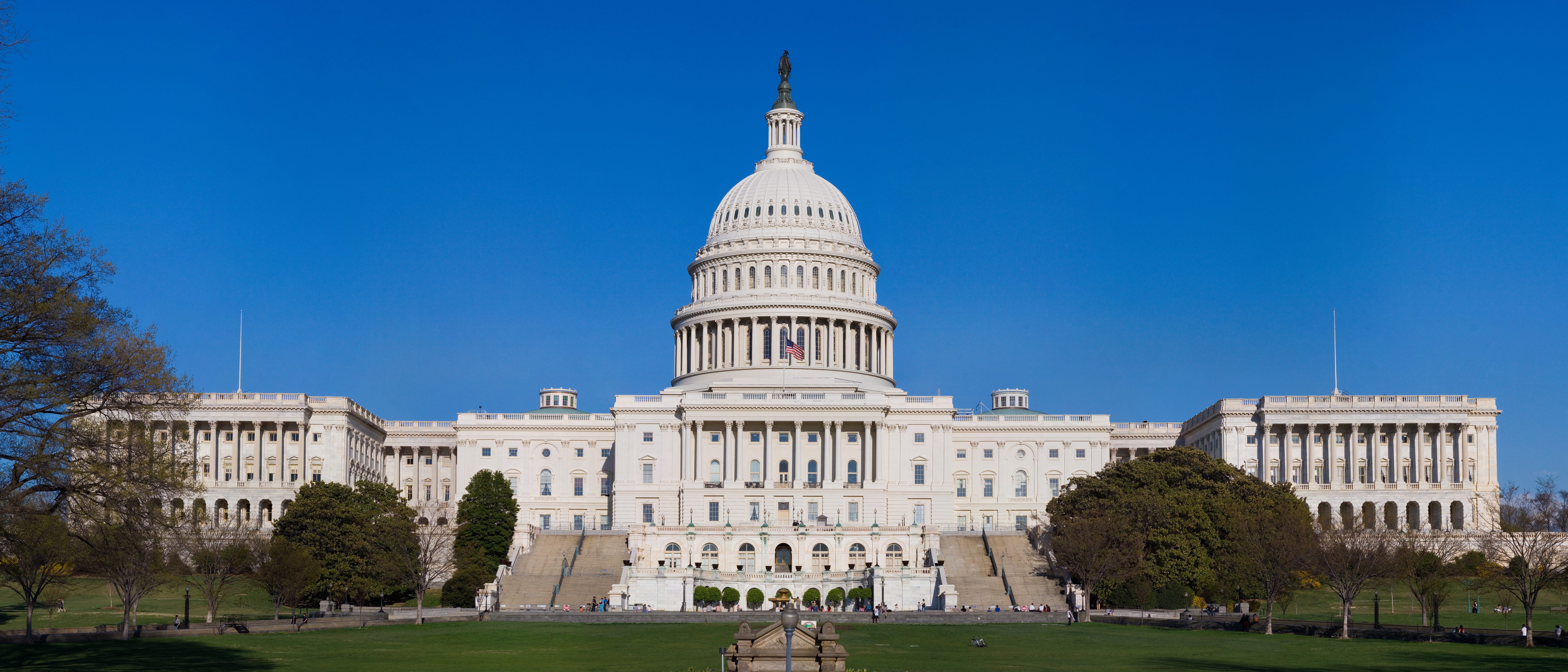
Let’s get started.
The Actions of the President
May 29, 2026
Executive Order - REALIGNING UNITED STATES CORE CHILDHOOD VACCINE RECOMMENDATIONS WITH BEST PRACTICES FROM PEER, DEVELOPED COUNTRIES
This executive order directs federal health agencies to review the U.S. childhood vaccine schedule in light of an HHS assessment that compared American vaccine recommendations with those of other developed countries. The order states that the United States currently recommends more childhood vaccine doses than any of its peers and suggests aligning recommendations with “scientific evidence” and “international best practices” while protecting “parental authority and religious liberty.” It instructs the CDC and its Advisory Committee on Immunization Practices (ACIP) to evaluate the assessment and current clinical data and consider “appropriate updates to the vaccine schedule.” The order also requires federal agencies to align immunization-related programs and coverage for federal employees with the CDC-adopted schedule.
Memorandum - Approving Critical Position Pay Authority for National Security Investment Workforce
This presidential memorandum authorizes the use of special “critical position pay” authority to help federal agencies recruit and retain up to 400 highly qualified professionals for “national security-related investment programs.” Under the directive, the Office of Personnel Management may approve salaries of up to $400,000 for positions involving critical minerals, advanced materials, supply chain security, engineering, finance, and legal expertise.
Executive Order - REMOVING UNNECESSARY AND COUNTERPRODUCTIVE RESTRICTIONS ON ACCESS TO FEDERAL LANDS
This executive order rescinds two executive orders from the 1970s that governed off-road vehicle use on federal lands and required agencies to consider impacts on wildlife, recreation, noise, and scenic resources when designating areas for vehicle access.
The rescinded orders were:
Executive Order 11644, issued by Richard Nixon on February 8, 1972.
Executive Order 11989, issued by Jimmy Carter on May 24, 1977.
The current order directs federal agencies to repeal or revise regulations implementing the old orders and replace them with a “framework based on existing statutory authorities.” According to the administration, the change will expand public access to federal lands, increase recreational opportunities, reduce permitting delays, and promote “multiple-use management of public lands.”
Although the order is framed in terms of recreation and public access, much of its focus is on expanding opportunities for resource development and infrastructure projects on federal lands. The order specifically states that the previous standards created barriers to energy and timber production and utility maintenance, and it criticizes requirements related to wildlife impacts, recreation conflicts, and scenic values as subjective and difficult to administer. In practice, the order is likely to make it easier for agencies to authorize vehicle access associated with energy development, mining, timber harvesting, utility projects, and other commercial uses of federal lands.
May 24, 2026
Presidential Message on Pentecost
This is a message from President Trump talking about the Pentecost on May 24th, 2026. Here is an excerpt:
Melania and I join many Christians throughout our Nation and around the world who are joyfully celebrating the miracle of Pentecost today and the birth of Christ’s Church.
Fifty days after the glorious Resurrection of our Lord and Savior Jesus Christ on Easter Sunday, the Bible tells us that the Holy Spirit descended upon the Apostles in Jerusalem in tongues of fire, triumphantly fulfilling Christ’s promise and giving them the courage and divine authority to proclaim the message of God to every nation and people.
May 22, 2026
Proclamation - MEMORIAL DAY, 2026
This is a proclamation declaring May 25, 2026, as a day of “prayer for permanent peace,” honoring fallen American soldiers. This includes 13 service members who died during the Iran War. Click above for the full statement.
May 19, 2026
Proclamation - TO IMPLEMENT CERTAIN PROVISIONS IN THE CONSOLIDATED APPROPRIATIONS ACT, 2026, AND FOR OTHER PURPOSES
The proclamation extends various African and Caribbean trade preference programs through the end of 2026, including duty-free treatment under the African Growth and Opportunity Act (AGOA), apparel and fabric programs tied to AGOA, and Haiti trade preferences under the Caribbean Basin Economic Recovery Act. It also restores Gabon’s status as a beneficiary sub-Saharan African country after the U.S. government determined the country had made sufficient progress toward meeting “eligibility requirements.”
Executive Order - RESTORING INTEGRITY TO AMERICA’S FINANCIAL SYSTEM
The executive order directs federal financial regulators to expand scrutiny of financial activity involving undocumented or non-work-authorized immigrants; it suggests that immigrants who engage in financial transactions are often involved in money laundering, labor trafficking, tax evasion, sanctions evasion, and consumer credit instability. It also instructs the Treasury Department to issue formal guidance to banks and other financial institutions identifying “suspicious activity patterns” tied to unauthorized employment arrangements, like off-the-books payroll systems, funnel accounts, structured cash withdrawals, shell companies, and the use of peer-to-peer payment platforms (Venmo, Cash App, etc).
The order talks a lot about the use of Individual Taxpayer Identification Numbers (ITINs) and how using these in transactions can potentially be a liability for financial institutions. Individual Taxpayer Identification Numbers, or ITINs, are tax processing numbers issued by the Internal Revenue Service to individuals who are not eligible for a Social Security number but still need to file taxes or be included on tax documents in the U.S. An ITIN doesn’t provide legal immigration status or work authorization, but it does allow individuals to comply with federal tax laws and, in some cases, access banking or credit services.
Framing ITINs as a recipe for fraud, the order recommends new rules allowing institutions to seek additional information regarding immigration and work authorization status of potential customers. The Consumer Financial Protection Bureau and federal banking regulators are also directed to examine whether deportation risk and potential wage loss should be considered as part of lenders’ “ability-to-repay” analyses for mortgages, auto loans, and other consumer credit products.
So, while the administration frames the contents of this order as part of a broader effort to “restore integrity” to the financial system and reduce what it describes as “structural risks,” it’s actually just focused on immigrants.
Executive Order - INTEGRATING FINANCIAL TECHNOLOGY INNOVATION INTO REGULATORY FRAMEWORKS
The executive order directs federal financial regulators to reduce barriers facing fintech (financial technology) firms and modernize rules around digital finance and payment systems. It argues that existing regulations are fragmented and overly burdensome, often favoring established financial institutions over newer technology-driven companies.
The order defines fintech firms broadly, including companies involved in digital banking, blockchain services, payment processing, lending, investment management, and digital assets, and calls for stronger collaboration between regulators, banks, credit unions, and financial technology companies.

Like what you’re reading? Become a subscriber today!
The Actions of Congress
The Senate
Notable Measures Considered
S. Res. 690; An executive resolution authorizing the en bloc consideration in Executive Session of certain nominations on the Executive Calendar.
This resolution allows a block confirmation of numerous federal nominees, rather than confirming them one by one.
It was AGREED TO on May 11, 2026, by a yea-and-nay vote of 46 YEAS to 45 NAYS, with 9 not voting.
On May 13, Senate Democrats made three attempts to nullify Trump Administration rules that rescind consumer financial protections for areas such as medical debt collections and predatory lending. All three were defeated by Senate Republicans. They were:
S.J.Res.130 - A joint resolution providing for congressional disapproval under chapter 8 of title 5, United States Code, of the rule submitted by the Bureau of Consumer Financial Protection relating to withdrawal of the rule relating to “Consumer Financial Protection Circular 2024-05: Improper Overdraft Opt-In Practices”.
REJECTED on May 13, 2026, by a yea-and-nay vote of 47 YEAS to 53 NAYS.
S.J.Res.141 - A joint resolution providing for congressional disapproval under chapter 8 of title 5, United States Code, of the rule submitted by Bureau of Consumer Financial Protection relating to the withdrawal of the rule relating to “Debt Collection Practices (Regulation F); Deceptive and Unfair Collection of Medical Debt”.
REJECTED on May 13, 2026, by a yea-and-nay vote of 50 YEAS to 50 NAYS.
S.J.Res.132 - A joint resolution providing for congressional disapproval under chapter 8 of title 5, United States Code, of the rule submitted by the Bureau of Consumer Financial Protection relating to the withdrawal of the rule relating to “Examinations for Risks to Active-Duty Servicemembers and Their Covered Dependents”.
REJECTED on May 13, 2026, by a yea-and-nay vote of 48 YEAS to 52 NAYS.
On the Motion to Discharge S.J.Res. 185; A joint resolution to direct the removal of United States Armed Forces from hostilities within or against the Islamic Republic of Iran that have not been authorized by Congress.
This is the same resolution that has already appeared in this digest several times, attempting to disengage the United States from hostilities against Iran. This vote was not to pass the resolution, but to discharge it from committee for floor consideration.
It was AGREED TO on May 19, 2026, by a yea-and-nay vote of 50 YEAS to 47 NAYS, with 3 not voting. Notably, 4 Republicans voted with Democrats for resolution to discharge: Senators Murkowski (R-AK), Paul (R-KY), Collins (R-ME), and Cassidy (R-LA). One Democrat, Sen. Fetterman (D-PA), voted against discharging the resolution.
Nomination Confirmations
On the nomination confirmation of Evan Rikhye, of the Virgin Islands, to be Judge for the District Court of the Virgin Islands
CONFIRMED on May 20, 2026, by a yea-and-nay vote of 52 YEAS to 47 NAYS.
On the nomination confirmation of Sheria Akins Clarke, of South Carolina, to be U.S. District Judge for the District of South Carolina
CONFIRMED on May 19, 2026, by a yea-and-nay vote of 52 YEAS to 38 NAYS, with 10 not voting.
On the nomination confirmation of Kevin Warsh, of Florida, to be a Member of the Federal Reserve Board
CONFIRMED on May 12, 2026, by a yea-and-nay vote of 51 YEAS to 49 NAYS.
On the nomination confirmation of Kevin Warsh, of Florida, to be Chairman of the Board of Governors, Federal Reserve Board
CONFIRMED on May 13, 2026, by a yea-and-nay vote of 54 YEAS to 45 NAYS, with 1 not voting.
Due to the passage of S.Res.690, 49 nominees were confirmed on May 18, 2026, by a yea-and-nay vote of 51 YEAS to 46 NAYS, with 3 not voting. These were mostly executive placements and United States Attorneys for various states.
The House of Representatives
Notable Measures Considered
H.R.6047 - Sharri Briley and Eric Edmundson Veterans Benefits Expansion Act of 2026
Per the Congressional Research Service, “this bill expands specified benefits programs for veterans and their survivors and establishes a supplemental monthly allowance ($833.33) for certain disabled veterans.”
It was PASSED on May 21, 2026, by a yea-and-nay vote of 235 YEAS to 179 NAYS, with 16 not voting.
H.R.1041 - Veterans 2nd Amendment Protection Act
Per the CRS, “This bill prohibits the Department of Veterans Affairs (VA) from transmitting certain information to the National Instant Criminal Background Check System (NICS) utilized by licensed importers or dealers of firearms. Specifically, the bill prohibits the VA from transmitting personally identifying information of a veteran or a beneficiary to the NICS solely on the basis that such veteran or beneficiary has an appointed fiduciary to manage their benefits, unless there is an order or finding of a judicial authority that such veteran or beneficiary is a danger to themselves or others.”
It was PASSED on May 21, 2026, by a yea-and-nay vote of 216 YEAS to 201 NAYS, with 13 not voting.
H.R.1329 - Smithsonian American Women’s History Museum Act
This bill would have authorized the Smithsonian American Women’s History Museum to be located on the National Mall in DC. Per the CRS, “the bill directs the museum to be dedicated to preserving, researching, and presenting the history, achievements, and lived experiences of biological women in the United States. Under this bill, the museum may not identify, present, describe, or depict any biological male as a female.”
It was REJECTED on May 21, 2026, by a yea-and-nay vote of 204 YEAS to 216 NAYS, with 12 not voting.
H.R.2616 - Stopping Indoctrination and Protecting Kids Act
This bill prohibits schools from changing the gender of a student on school forms without parental consent. This includes pronouns, preferred names, and gender markers, as well as bathroom and locker room use.
It was PASSED on May 20, 2026, by a yea-and-nay vote of 217 YEAS to 198 NAYS, with 15 not voting.
H.R.1993 - 25th Anniversary of 9/11 Commemorative Coin Act
This bill directs the Deparment of Treasury to mint and issue coins commemorating the victims of the September 11, 2001 terrorist attacks.
It was PASSED on May 20, 2026, by a yea-and-nay vote of 400 YEAS to 0 NAYS, with 15 not voting.
S.1003 - Lulu’s Law
This bill requires the FTC to allow the issuance of wireless emergency alerts in the event of a shark attack.
It was PASSED on May 20, 2026, via a 2/3 required suspension of the rules yea-and-nay vote of 401 YEAS to 6 NAYS, with 23 not voting.
S.2393 - Fiscal Year 2025 Veterans Affairs Major Medical Facility Authorization Act
This bill allows the Dept. of Veterans’ Affairs to carry out a “major medical facility project” in St. Louis, Missouri during fiscal year 2026.
It was PASSED on May 20, 2026, via a 2/3 required suspension of the rules yea-and-nay vote of 405 YEAS to 5 NAYS, with 20 not voting.
H.R.5317 - Community Bank Deposit Access Act of 2025
Per the CRS, “this bill changes the treatment of certain types of deposits so they are no longer classified as brokered deposits. Brokered deposits are funds placed by a broker on behalf of a client in a depository institution to maximize interest rates and for depository insurance purposes. Currently, institutions that accept brokered deposits may be subject to additional oversight.”
This bill was PASSED on May 20, 2026, via a 2/3 required suspension of the rules yea-and-nay vote of 393 YEAS to 16 NAYS, with 21 not voting.
H.R.4544 - American Access to Banking Act
This bill requires federal financial regulators to review and streamline the application process for the formation of new banks or credit unions.
It was PASSED on May 20, 2026, via a 2/3 required suspension of the rules yea-and-nay vote of 405 YEAS to 4 NAYS, with 21 not voting.
H.R.3234 - Keeping Deposits Local Act
This bill increases the amount insured depository institutions may accept as reciprocal deposits. (Reciprocal deposits are used by institutions to increase the availability of deposit insurance by splitting large deposits using a reciprocal network of institutions.)
It was PASSED on May 20, 2026, via a 2/3 required suspension of the rules yea-and-nay of 405 YEAS to 0 NAYS, with 25 not voting.
The Supreme Court of the United States
DAREN K. MARGOLIN, DIRECTOR OF THE EXECUTIVE OFFICE FOR IMMIGRATION REVIEW v. NATIONAL ASSOCIATION OF IMMIGRATION JUDGES
Case Background
This case involves a dispute over internal speech restrictions placed on immigration judges and, more broadly, whether federal courts can raise and decide major jurisdictional theories that the parties themselves never argued.
The controversy began in 2021 when the Executive Office for Immigration Review (EOIR), which oversees the immigration courts, adopted a policy requiring immigration judges to obtain supervisory approval before giving public speeches related to their official duties. EOIR said the policy was intended to ensure that public comments carrying the apparent “imprimatur” of the agency remained consistent with official government positions. The National Association of Immigration Judges challenged the rule in federal district court, arguing that it violated judges’ First Amendment speech rights and Fifth Amendment protections.
The government responded that the lawsuit could not proceed directly in district court because of the Civil Service Reform Act (CSRA), a federal employment statute that channels most workplace disputes involving federal employees into an administrative review process through the Merit Systems Protection Board (MSPB). Instead of arguing that the CSRA itself was invalid or inapplicable overall, the judge association argued only that its constitutional claims were not the sort of workplace disputes Congress intended to route through the administrative process.
Lower Court Decision
Both the U.S. District Court for the Eastern District of Virginia and the Fourth Circuit agreed that the claims were in fact “covered” by the CSRA, meaning they had to move through the usual federally employee complaint system. The Fourth Circuit also questioned whether the CSRA review system was still functioning the way Congress intended because of contemporary disputes involving the MSPB and the Office of Special Counsel. Specifically, they pointed to the lack of a functioning MSPB quorum (sometimes there weren’t enough people present to hold quorum) and legal challenges surrounding presidential removal power over agency officials. The court suggested these developments might undermine the assumptions behind Congress’s administrative review structure and remanded the case for further factual development on that theoretical question.
Supreme Court Ruling
On May 26, 2026, the Supreme Court reversed in a short, unanimous per curiam opinion.
The justices held that the Fourth Circuit violated the longstanding “principle of party presentation,” meaning courts generally decide only the issues actually raised and argued by the litigants; they wrote that federal courts are not free-floating commissions empowered to search for new constitutional or jurisdictional theories on their own initiative. Because neither side had argued that the CSRA system had become invalid or dysfunctional due to changes at the MSPB, the Fourth Circuit improperly transformed the litigation into an entirely different case.
The opinion leaned heavily on the Court’s recent decision in Clark v. Sweeney (2025), where the Court similarly rebuked the Fourth Circuit for granting relief on legal theories the parties themselves had never presented. The justices stressed that the American judicial system is adversarial rather than inquisitorial: courts rely on the parties to frame the dispute and generally should not invent entirely new issues midstream.
Justice Thomas, joined by Justice Barrett, wrote separately to criticize the Fourth Circuit even more sharply. He argued that the lower court’s reasoning was driven less by legal interpretation than by concern over contemporary political disputes involving presidential removal authority and agency independence. Thomas maintained that even if conditions surrounding the MSPB had changed, courts are not permitted to effectively rewrite statutes based on shifting political circumstances. In his view, the CSRA remained binding law unless Congress itself amended it.
JOHN Q. HAMM, COMMISSIONER, ALABAMA DEPARTMENT OF CORRECTIONS, PETITIONER v. JOSEPH CLIFTON SMITH
Tis case arose out of the 1997 murder of Durk Van Dam in Alabama.
Joseph Clifton Smith and another man lured Van Dam to an isolated area to rob him, then brutally beat and killed him using blunt force and a power saw. A jury convicted Smith of capital murder and recommended the death penalty, which the trial judge imposed. At sentencing, Smith presented evidence suggesting intellectual disability, including IQ scores in the low 70s and school records showing he had been classified as “educable mentally retarded” as a child. At the time, however, the Supreme Court had not yet ruled that executing intellectually disabled individuals violated the Constitution.
That changed in 2002 with Atkins v. Virginia, where the Court held that the Eighth Amendment bars the execution of intellectually disabled defendants. Alabama adopted a legal standard requiring defendants to prove three things: significantly subaverage intellectual functioning (generally an IQ of 70 or below), major adaptive deficits, and onset before age 18. Smith then pursued post-conviction relief, arguing that he met Alabama’s definition and therefore could not constitutionally be executed.
Why did he do this?
Over the years Smith had accumulated five IQ scores—72, 74, 75, 74, and 78— and various experts from both sides disagreed about what those scores meant. Alabama’s expert argued that the consistency of the scores showed Smith functioned in the “borderline” or low-average range rather than meeting the threshold for intellectual disability; Smith’s experts argued that the scores had to be interpreted alongside the standard error of measurement and broader evidence of cognitive impairment, adaptive deficits, poor academic functioning, and developmental limitations.
Lower Court Rulings
After an evidentiary hearing, the U.S. District Court for the Southern District of Alabama concluded that Smith had proven intellectual disability by a preponderance of the evidence and could therefore not be executed. The judge emphasized that this was a “close case,” but found that Smith’s scores were low enough (particularly when accounting for standard deviation and evidence of adaptive deficits) to satisfy the constitutional standard. The Eleventh Circuit ultimately affirmed using what it called a “holistic” approach, considering IQ scores together with expert testimony and broader evidence of functioning rather than relying mechanically on a single number.
Supreme Court Ruling
The Supreme Court initially agreed to hear the case to address a narrower but nationally important procedural question: how courts should analyze multiple IQ scores in Atkins claims. Specifically, the Court was asked whether courts must somehow aggregate or combine IQ scores statistically, or whether judges may instead evaluate them holistically alongside adaptive-functioning evidence and expert testimony.
On May 21, 2026, the Court changed course and dismissed the case as “improvidently granted,” meaning it decided the case was not the right vehicle to resolve the broader issue. Justice Sotomayor, joined by Justice Jackson, wrote a lengthy concurrence explaining that the factual record and procedural history were too messy to establish a nationwide rule for evaluating multiple IQ scores. She wrote that no clear consensus existed among courts or experts about the correct statistical method and defended the lower courts’ “holistic” approach as consistent with prior Supreme Court precedent and modern clinical practice.
Justice Thomas, joined in part by Justice Alito, dissented sharply. He argued that Smith plainly did not qualify as intellectually disabled because none of his IQ scores were actually 70 or below, and he criticized the broader Atkins framework itself as constitutionally unsupported and increasingly unworkable. The dissent portrayed the lower courts’ reasoning as statistically unsound and accused the Court’s intellectual-disability jurisprudence of producing confusion and arbitrary outcomes in death penalty litigation.
M & K Employee Solutions, LLC v. Trustees of the IAM National Pension Fund
Case Background
This case involves a technical but financially significant dispute under ERISA (the Employee Retirement Income Security Act of 1974) concerning how multiemployer pension plans calculate “withdrawal liability.” When an employer leaves an underfunded multiemployer pension plan, federal law requires it to pay its share of the plan’s unfunded vested pension obligations. Calculating that amount depends heavily on “actuarial assumptions,” which estimates the present value of future pension payments; in other words, actuaries have to estimate, based on a pension’s investments, what an amount of money will be worth in the future.
The petitioners here were four employers that withdrew from the IAM National Pension Fund during 2018. The Fund calculated their withdrawal liability using a new 6.5% discount rate adopted in January 2018, when previously, the Fund had used a 7.5% rate. Because lower discount rates dramatically increase projected pension liabilities, the change substantially increased the amount the employer had to pay. One employer’s assessed liability, for example, jumped from about $1.8 million to more than $6 million.
The employers argued that ERISA required the Fund to use whatever actuarial assumptions were already “in effect” on the statutory “measurement date” — December 31, 2017, the last day of the prior plan year. Arbitrators agreed with the employers and ruled that the Fund could not retroactively apply assumptions adopted after that date.
Lower Court Decisions
The U.S. District Court for the District of Columbia and the D.C. Circuit disagreed. The courts concluded that ERISA’s language requiring liabilities to be measured “as of” the measurement date fixed the factual data used in the calculation, but did not impose a deadline for when actuaries had to choose their assumptions. The D.C. Circuit held that actuaries could adopt assumptions after the measurement date so long as those assumptions reflected the best estimate of the plan’s anticipated experience.
Supreme Court Ruling
In a May 21, 2026, unanimous opinion delivered by Justice Ketanji Brown Jackson, the Supreme Court affirmed the D.C. Circuit.
The Court held that ERISA does not require actuarial assumptions to be selected before the measurement date. Justice Jackson explained that actuarial assumptions are predictive tools rather than fixed historical facts, and nothing in ERISA’s text imposed the timing restriction the employers sought.
The Court also emphasized that ERISA separately requires actuaries to use assumptions representing their “best estimate” of anticipated experience. Requiring actuaries to lock in assumptions before the measurement date, the Court reasoned, could actually prevent them from using the most current and accurate information available.
The ruling was viewed as a significant victory for multiemployer pension funds because it gives actuaries greater flexibility when calculating withdrawal liability and generally makes it easier for pension plans to increase liabilities assessed against withdrawing employers. It also resolved a circuit split between the D.C. Circuit and the Second Circuit over the timing of actuarial assumption selection.
Havana Docks Corp. v. Royal Caribbean Cruises, Ltd.
Case Background
This case centers on Title III of the Cuban Liberty and Democratic Solidarity Act of 1996, which allows American nationals to sue companies that “traffic” in property confiscated by Cuba after 1959.
The underlying property dispute dated back to 1928, when Havana Docks Corporation acquired a long-term concession from the Cuban government allowing it to build and operate docks at the Port of Havana. Havana Docks constructed terminal facilities and piers and retained the right to operate them until 2004 under what Cuban law described as a usufructuary concession—essentially a long-term right to use and profit from the property without outright ownership. The agreement also provided that if Cuba expropriated the facilities before the concession expired, Havana Docks would receive compensation for the value of the works it had built.
After Fidel Castro seized power, the Cuban government nationalized American-owned assets in Cuba and specifically targeted Havana Docks. In 1960, Cuban authorities physically occupied the docks, expelled Havana Docks’ personnel, and confiscated both the company’s concession rights and the dock facilities themselves without compensation. The Foreign Claims Settlement Commission later certified Havana Docks’ losses at roughly $9 million plus interest.
For decades, however, Havana Docks had no practical legal remedy. Although Congress enacted the Helms-Burton Act in 1996 to deter foreign companies from profiting from confiscated Cuban property, Presidents Clinton, Bush, and Obama continuously suspended the law’s private right of action for diplomatic reasons. That changed in 2019 when President Trump allowed the suspension to expire, enabling lawsuits under Title III for the first time.
Lower Court Decisions
Havana Docks then sued four major cruise lines—Royal Caribbean, Norwegian, Carnival, and MSC—alleging that from 2016 to 2019 they knowingly trafficked in confiscated property by using the Havana docks to embark and disembark nearly a million cruise passengers traveling to Cuba. The U.S. District Court for the Southern District of Florida agreed and entered summary judgment against the cruise lines, awarding Havana Docks more than $100 million against each defendant after statutory trebling and accumulated interest.
The Eleventh Circuit later reversed. The appellate court reasoned that courts should evaluate the dispute through a “counterfactual” lens by imagining what property rights would have existed had Cuba never confiscated anything in 1960. Because Havana Docks’ concession would naturally have expired in 2004 even absent confiscation, the Eleventh Circuit concluded that the cruise lines’ use of the docks between 2016 and 2019 could not have interfered with any surviving Havana Docks property interest.
Supreme Court Opinion
On May 21, 2026, in an 8-1 decision, the Supreme Court reversed.
In an opinion penned by Justice Thomas, the Court rejected the Eleventh Circuit’s counterfactual approach and held that Title III focuses on trafficking in confiscated property itself, not merely ongoing legal interests in that property. According to the majority, once the Cuban government confiscated the docks in 1960, the physical dock facilities themselves became “tainted” property under the statute. Anyone later commercially using those docks without authorization could potentially face liability regardless of whether Havana Docks’ original concession would eventually have expired.
The Court also claimed that the statute defines confiscation broadly to include the seizure of “ownership or control” of property. Because Cuban authorities physically occupied and took control of the dock facilities in 1960, the majority concluded that the docks themselves qualified as confiscated property under Title III. The cruise lines therefore potentially trafficked in confiscated property when they used the facilities for commercial cruises to Cuba.
Justice Sotomayor, joined by Justice Kavanaugh, concurred separately to warn about unresolved questions involving potentially enormous or repetitive damages awards under Title III. Sotomayor also raised concerns about due process given that the federal government had previously encouraged lawful travel to Cuba during the Obama administration and had authorized some cruise operations through federal licensing regimes.
Kagan’s Dissent
Justice Kagan dissented. She argued that Havana Docks never owned the physical docks themselves, only a time-limited concession allowing use of them until 2004. In her view, once that concession would naturally have expired, later use of the docks by the cruise lines could not constitute trafficking in Havana Docks’ confiscated property interest. Kagan analogized the situation to a landlord-tenant relationship, arguing that Cuba confiscated Havana Docks’ lease-like rights rather than the underlying docks themselves.
Thank You
We hope you enjoyed this week’s digest!